Greek Morphology Question

In reviewing my Greek to get ready to teach Antigone, I’ve come across a curious question about Greek verbs. For many verbs, the shortest forms, which students tend to find the most confusing, are not the present indicatives, as we might expect, but some of the subjunctives. These are sometimes only a single syllable in the singular, though the plurals are always one syllable longer. Besides the present subjunctive of eimí (ô, êis, êi, etc.), the only one-syllable subjunctives I can think of are the aorist subjunctives of five -MI verbs and two others: (baíno), gnô (gignósko), (dídomi), thô (títhemi), stô (hístemi), phô (phe), and (emi). Have I missed any?

Note: Greek can be transliterated precisely, if inelegantly, in plain HTML by underlining eta and omega as above, except when the circumflex makes it superfluous. In effect, I put the long mark under the vowel instead of over it. Using w for omega and h for eta may be clearer in some ways, but HTML doesn’t allow accents on (English) consonants

Posted in Greek Grammar | 1 Comment

After Long Silence

I haven’t posted much lately because I’ve been moving all my stuff from Baltimore to North Carolina for a new job. I’ll be teaching Latin II (second half of Wheelock), Latin IV (AP Vergil), Greek IV (Antigone and Apology) and Geometry at Raleigh Latin High School. It’s embarrassing to admit, but in my twelve years of previous full-time teaching, nine of them in universities, I’ve never had the opportunity to teach a Greek tragedy or a Platonic dialogue in Greek. (By the way, RLHS is still accepting students for the upcoming year if you live in Raleigh.)

I’m proud to say that at 52, I can still move everything I own with nothing more than a rented truck, a two-wheel dolly, and a gallon or two of Gatorade. That may not sound all that impressive, but:

  1. I own roughly five tons of stuff, including 200 boxes of books, 18 real-wood book- and CD-shelves of various sizes, 16 ornamental cinderblocks to make (with 1x14s) eight shelves worth of very solid two-sided bookshelves, three 4-drawer file cabinets, 2 armchairs, and a futon. It took three round trips (over five days) in a Penske cargo van, stuffed to the gills, including the front compartment, plus three more trips in my car for the odds and ends. (Look for additions to my Books for Sale list in the next few weeks: I really need to cut down.)
  2. All three truckloads, and roughly half the stuff taken by car, were loaded in 90o+ heat with no shade, and it was 96o in Raleigh when I unloaded the first and third truckloads a couple of weeks ago. (The second was mostly unloaded after dark, which helped.) And cargo vans don’t come with ramps. I did make sure to rent an apartment with only one small step to get the dolly over: in fact that was my main criterion in choosing a place to live. The gentle slope down the front walk to the front door didn’t hurt.

Can I call myself a Self-Moved Mover now, or would that be too Aristotelian — not to mention hybristic? I do have a slight urge (call it a demi-urge) to hire a moving company to do the work next time around, though it would likely double the cost.

There’s plenty of unpacking still to do. At the worst of it, when I had hastily unloaded all three truckloads and unpacked very little, the place felt rather like the burrow of a gopher or groundhog: completely full of furniture and overhanging stacks of boxes, with meandering paths, just wide enough for me to squeeze through, connecting the front door to the kitchen, the armchair, the table with the laptop, the bathroom, and the corner of the bedroom with the futon in it. As I get the books and CDs out of the boxes and into the shelves and then flatten the boxes, it’s starting to clear out a bit and look fit for human habitation.

Posted in Jokes, Work: Teaching | Leave a comment

Schopenhauer On Reading II

Buying books would be a good thing if one could also buy the time to read them in: but as a rule the purchase of books is mistaken for the appropriation of their contents.

Ibid.

Posted in - Aphorisms, Ephemerides, Philosophy | Leave a comment

Schopenhauer On Reading I

The art of not reading is a very important one. It consists in not taking an interest in whatever may be engaging the attention of the general public at any particular time. When some political or ecclesiastical pamphlet, or novel, or poem is making a great commotion, you should remember that he who writes for fools always finds a large public. — A precondition for reading good books is not reading bad ones: for life is short.

Essay and Aphorisms, tr. R. J. Hollingdale, Penguin, 1970, page 210.

Posted in - Aphorisms, Ephemerides, Philosophy | Leave a comment

Macaulay On Martial

I have now gone through the first seven books of Martial, and have learned about 360 of the best lines. His merit seems to me to lie, not in wit, but in the rapid succession of vivid images. I wish he were less nauseous. He is as great a beast as Aristophanes. He certainly is a very clever, pleasant writer. Sometimes he runs Catullus himself hard. But besides his indecency, his servility and his mendicancy disgust me. In his position,—for he was a Roman Knight,—something more like self-respect would have been becoming. I make large allowance for the difference of manners; but it never can have been comme il faut in any age or nation for a man of note,—an accomplished man,—a man living with the great,—to be constantly asking for money, clothes, and dainties, and to pursue with volleys of abuse those who would give him nothing.

From Macaulay’s diary for 1857, quoted in Life and Letters, ii.372.

Posted in Latin Literature, Nachleben | Tagged , | Leave a comment

Macaulay On Grote

Macaulay used to say that a lady who dips into Mr. Grote’s history, and learns that Alcibiades won the heart of his fellow-citizens by the novelty of his theories and the splendour of his liturgies, may get a very false notion of that statesman’s relations with the Athenian public.

George Otto Trevelyan, The Life and Letters of Lord Macaulay, i.411, note 1.

I suppose Macaulay mentions “a lady” because any man likely to read Grote would know enough Greek to distinguish between Greek theoría and leitourgía and their English cognates.

Posted in Greek Historiography, Nachleben | Leave a comment

Happy Birthday, Ibis!

Since David Meadows is on vacation, I suppose it falls to me to point out that today is the Dies Alliensis, and therefore the birthday of Ovid’s fictional enemy Ibis. Here are the more amusing bits from Part IV of A. E. Housman’s paper “The Ibis of Ovid” (JPh 35 [1920], 297-318, reprinted in Classical Papers, 3.1028-42):

Who was Ibis? Nobody. He is much too good to be true. If one’s enemies are of flesh and blood, they do not carry complaisance so far as to choose the dies Alliensis for their birthday and the most ineligible spot in Africa for their birthplace. Such order and harmony exist only in worlds of our own creation, not in the jerry-built edifice of the demiurge. Nor does man assail a real enemy, the object of his sincere and lively hatred, with an interminable and inconsistent series of execrations which can neither be read nor written seriously. To be starved to death and killed by lightning, to be brayed in a mortar as you plunge into a gulf on horseback, to be devoured by dogs, serpents, a lioness, and your own father in the brazen bull of Phalaris, are calamities too awful to be probable and too improbable to be awful.

* * * * * * * * * * * * * * * *

The 91st poem of Catullus and the 5th and 17th epodes of Horace, however little accordant with modern fashions, are masterpieces without which no anthology of Latin poetry is complete or representative. And the first 250 lines of the Ibis are another masterpiece: Ovid has written no passage of equal length which has equal merit.

From that point onward the poem is merely a display of erudition. Ovid, at the date of his exile, was bursting with information rather recently acquired. In his young days he had been by no means a learned poet; and Propertius, in the season of their sodality, must often have exhorted him to lay in a larger stock of those examples from mythology with which his own elegies are so much embellished or encumbered. But by the time he was fifty he had at his disposal more examples from mythology than he knew what to do with. His studies for the metamorphoses and some of his studies for the fasti (notably in the aetia of Callimachus) had furnished him with a far greater number of stories and histories than could be crowded into those two poems; and he felt the craving of the opsimathés to let everyone know how learned he had become. Here was his chance: history and mythology alike are largely composed of misfortunes as bad as one could wish for one’s worst enemy; and he could discharge a great part of his load of knowledge through the channel of imprecation.

Some desultory comments:

  1. Why did the Journal of Philology use neither italics nor capitals for ‘metamorphoses’, ‘fasti’, and ‘aetia’?
  2. Is Housman’s admiration for the Ibis perhaps a bit influenced by his own taste for invective?
  3. If the poem is “little accordant with modern fashions”, is it more accordant with today’s postmodern fashions? If so, why do so few read it? Too difficult? Perhaps I should say that I have read it, and found it much more diverting than the Medicamina and for that matter the Tristia. Then again, I’m rather fond of invective.
  4. The Ibis’ reputation for obscurity is exaggerated. I recognized most of the myths without consulting the notes in Ellis’ edition, though the gruesome deaths of various Hellenistic tyrants such as Apollodorus of Cassandreia were new to me.
Posted in Latin Literature | Tagged | Leave a comment

Categories (Mine, not Aristotle’s)

Posting should be more frequent now that I’ve settled the categories. WordPress doesn’t make it easy. The category archives are displayed in the order in which the categories were added. Since I want them to appear in a particular logical order, so I had to decide exactly what categories I wanted and in what order, and then reset the categories for all existing posts. I now have 96 categories, though only a few have any posts yet. More tomorrow.

Posted in Announcements | Leave a comment

Martial IV

It’s too early to party, but I have uploaded the first e-fascicle of an electronic text of the complete epigrams of Martial: Book IV, with a few textual novelties, an original selection of variants and conjectures, and an apparatus criticus fuller than Shackleton Bailey’s Teubner but not so full as Lindsay’s OCT. The index file is so far only a prototype. There will be a few adjustments to Book IV, but it is 99% finished. Book I will be next, and is nearly ready. I plan to post questions here about specific possible improvements to the text and format, but comments may also be volunteered here.

Posted in Announcements, Critical Texts, Latin Literature | Tagged | Leave a comment

A Riddle And A Pun

What would be the most appropriate dish to serve at a party celebrating the publication of a book on Martial, or the Priapea, or some other scurrilous and scoptic classic? Crudités, of course.

Posted in Jokes, Latin Literature | Tagged , | Leave a comment

Oops!

One of the larger Spanish publishers (Espasa-Calpe) has just published a translation of twenty-three tales of “William Sidney Porter, más conocido como [= better known as] O’Henry”. The web-page includes a picture of the cover of the book: though blurry, it’s just clear enough to show the same error on the jacket. I wonder how long it will take them to figure out the problem, or if they already have and decided to sell it anyway. I also wonder whether anyone has been fired, or will be. Illiteracies like this can’t be good for sales. When I was in college, I was having trouble making up my mind which of two inexpensive paperback editions of Hume’s Dialogues concerning Natural Religion I should buy, until a classmate pointed out that one of them had different titles printed on the cover and spine. I immediately bought the other one.

Posted in Orbilius | 1 Comment

Fooling the Gods?

Language Hat has an interesting post on the etymology of ‘theodolite’, which he treats as some kind of exotic or obsolete scientific instrument. I have used one on the job, though not in the last quarter-century. From 1978 to 1982 I worked for a company that measured air pollution from moving trucks and airplanes, a process my boss invented, and we used theodolites to measure the winds at various altitudes. They were not carried along on the trucks and planes, but set up on the ground to track pink gas-filled balloons. As I recall, a theodolite is just a device to measure the precise direction in three-dimensional space from one’s own location to any object within sight. For instance, it may show that a neighboring hilltop or mountain peak is located at a bearing of 343°, i.e. north by northwest, and 12° above horizontal. It’s basically a small telescope on a tripod, with a plumb bob to level the platform, a compass to line it up north and south, and horizontal and vertical cranks with numbered dials to aim the sight and measure the vertical angle above (or slightly below) the plane of the earth’s surface and the horizontal angle clockwise from due north. One worker would turn the two cranks to keep the balloon in sight of the little telescope as long as she could, while another recorded the azimuth and elevation at set intervals of time. Our primitive computers (7K RAM, 40-character LED display, audio-casette storage — a bargain at $15,000 each) would then calculate the wind direction and (I think) speed at various heights, or perhaps we did that part on graph paper — it’s been a long time. As I recall, plumes emitted from power plants tended to skew clockwise as they went up, and sometimes had more complex shapes. We needed to know where the winds were blowing to decide where to send the truck or airplane.

As for the etymology, I told my fellow-workers at the time (an overeducated bunch) that ‘theo-dol-ite’ should mean ‘an instrument to fool the gods’. We looked it up, and Webster’s or Funk and Wagnall’s or whoever it was said that it means ‘an instrument for seeing clearly’. If so, the inventor messed up two of the vowels, since that should be a ‘theadelite’.

Posted in Etymology, Orbilius | 1 Comment

Scholastic Humor

Found on Amazon:

Martial, Buch VI: Ein Kommentar (Hypomnemata)
by Farouk Grewing

Availability: Currently unavailable.

It is in fact still in print in Germany, for only 89 Euros — around $107 — in paperback, and worth every penny. For more information, go here and search on the author’s (I mean the editor’s, not Martial’s) name. German Amazon also lists it, though with very little information except that they can ship it within 1-2 days. I would have thought that the various Amazon sites could share information and avoid misstatements, but apparently not.

What I found humorous is the single review on the U.S. Amazon site:

Amazon 5 stars Just great!, April 25, 2002
Reviewer: Dr. Farouk F. Grewing (Cambridge, MA United States)
I really did an excellent job on this one!

He did, actually, and I use the book often, still grateful that a book dealer in the U.S. was foolish enough to price a used copy in excellent condition at $20 when I would have gladly paid quite a bit more. (Some of my Martial texts, with marginal apparatus criticus, are nearly ready to unveil, though not Book VI.)

Dr. Grewing’s curriculum vitae (on line here) confirms that his middle initial is F. and that he was a visiting lecturer in the Boston area in 2002, so I suspect the review is genuine. One small detail of the c.v. is also slyly humorous. The bullets for list items are all dark green, except for the one marking a review of Hans Peter Obermayer, Martial und der Diskurs über männliche ‘Homosexualität’ in der Literatur der frühen Kaiserzeit, which is pink. I like the portrait, too.

Posted in Jokes, Latin Literature | Tagged | Leave a comment

Appeal for Information

After several years of stagnation, I am trying to update my list of Forthcoming Work in Classics. I would be grateful for any additions, deletions, and alterations to the list as it now stands. These may be left in the comments here, or sent by e-mail. Thanks in advance.

Posted in Forthcoming Texts | 8 Comments

Latin Scrabble V: Why Latin Scrabble is Even Better than English Scrabble

English Scrabble mostly proceeds by adding words that cross those already on the board. Of course, one can also extend a word at either or both ends, turning CAP into CAPE and then into ESCAPE or CAPED or CAPER and finally into ESCAPED or ESCAPER. Inflectional endings seem to provide a lot more opportunities for this sort of play in Latin Scrabble. For instance, if proper names are permitted, one can turn CICER (garbanzo bean) into nominative CICERO, then ablative CICERONE, then accusative CICERONEM. Or consider this sequence:

EGI (“I have done”)
LEGI (triple score: “I have read”, “to be read”, or “for a law”)
LEGIS (double score: “you read” or “of a law”)
LEGISTI (“you have read”)
LEGISTIS (“y’all have read”)
ELEGISTIS (“y’all have picked out”)
DELEGISTIS (ditto)

These possibilities also complicate one’s strategy. You should never leave the likelier possibilities open unless you have to. For instance, don’t turn CICER or CICERO into CICERONE if no one has played an M yet. There are five Ms in the Latin scrabble mix so if you don’t have one ready to use, chances are high that someone else does. Whoever plays it will get as much as you did plus a point — more if there is double or triple word score anywhere in the word, or a double or triple letter score under the M.

It is interesting to ask what would be the longest sequence of add-on words. A variation of this puzzle: what would be the longest sequence in which each word is exactly one letter longer than the previous word? Here’s my nomination (I assume a one-letter word could be used on the first turn, though I doubt anyone would ever do that):

A (double score, preposition and exclamation)
AB (preposition)
ABI (imperative)
ABIT (3rd person singular)
ABITU (4th declension ablative)
ABITUR (3rd person singular, present indicative passive)
ABITURO or ABITURA or ABITURI (various forms of the future active participle)
ABITUROS or ABITURAS or ABITURIS (ditto)

I’m not sure that ABITUR actually occurs in Classical Latin, so it might be challenged. However, ITUR certainly occurs in Vergil (Aeneid VI), and ABITUR is used in modern German scholastic Latin. Similar sequences beginning with O and OB or E and EX could also be constructed, though OBITUR and EXITUR would be even more dubious than ABITUR. There could also be some dispute whether ABIT should count double, as present (short I) and perfect (long I, shortened form of abiit, often printed abît).

Note: That’s all I have to say for now about Latin Scrabble. I may turn this into a Word or PDF pamphlet, adding a chart of letter frequencies and values. Before doing that, I would appreciate comments from readers.

Posted in Latin Scrabble | 2 Comments

Latin Scrabble IV: A Special Rule to Make Things More Interesting

A rule that increases the difficulty and interest of the game is to allow double or even triple score for homonyms, over and above any double or triple word scores marked on the board. This should not be permitted when the homonyms are different forms of the same word: it would be absurd to count PUERIS twice, once as dative and once as ablative, or OMNIBUS six times, for dative and ablative, masculine, feminine, and neuter. (Clever greedy people might even include the locative for a nonuple score, though actual locative uses of omnibus in literature would be very difficult to find, particularly when you need them in three different genders.) On the other hand, it seems perfectly reasonable, and challenging, to count LEGIS twice, once as genitive singular of lex, and once as the second person singular, present indicative active of lego, legere. Remember: quantity doesn’t matter. In this case, the player is, in effect, finding two different words to fit the same letters, and that ought to be worth something.

Some words could even count triple: EO is a verb (‘I go’), a pronoun (ablative singular masculine and neuter of is, ea, id), and an adverb (‘thither’). The best rule is that if they are words or forms of words listed separately in the dictionary (or in any one of the dictionaries present), they count as homonyms, but if they are separate forms of the same word, they do not. I would also count different forms of the same word if the quantity is the only difference: for example, LEGI would count triple as dative singular of lex, present passive infinitive of lego (with short E), and first person singular perfect active indicative of lego (with long E).

Why count homonyms? Because it challenges the players’ knowledge of Latin. Every student who has gotten beyond the first few chapters of the textbook knows that AMAS means ‘you love’, but those few who know that it also means ‘buckets for fire-fighting’ in the accusative, an alternative form of HAMAS, should be rewarded for their knowledge with extra points.

Posted in Latin Scrabble | Leave a comment

Latin Scrabble III: Clarifying the Rules

Here are some tentative examples of possible rules and rule changes:

  1. To avoid arguments, it helps to have an authority. There are obviously no official Scrabble word-lists for Latin. For high school students and undergraduates, the teacher can be the all-powerful and unquestioned judge. He or she will (we hope) be too far ahead of the students to participate without some form of handicapping anyway. For teachers and graduate students, written authorities are best. I lean towards inclusiveness, and would allow any form of any word found in the Oxford Latin Dictionary or Lewis & Short. If you are playing in a well-stocked departmental library, you could also use DuCange and the Thesaurus Linguae Latinae. Some cutthroat players might prefer to allow only words attested in classical Latin, or only words attested in Cicero, or only forms actually attested, so that a rare word only found once in the works of the Elder Pliny could only be used in the particular form he used. What about common words for which some forms are simply not attested, like sperum or spebus or most other 4th-declension plurals? This issue could easily get quite complicated, though the basic choices are obvious enough: allow any possible form, or just forms that were actually used.
  2. Middle and high school students should be allowed to consult a dictionary before making a move.
  3. Assimilated and unassimilated prefixes both count.
  4. Should Mediaeval forms such as lachrima (or even lachryma) count, or will only lacrima do? It depends on who is playing. In a gathering of Mediaevalists or palaeographers, surely the former. It hardly matters, as long as the decision is made before the game begins.
  5. Do proper names and Latinized Greek words count? Again, whether they do or not is less important than whether the decision is clear and made prior to beginning the game. As mentioned in part I, allowing proper names will make K, Y, and Z far easier to use. It also seems pedagogically sounder to widen the range of allowable words.
  6. What about enclitics? If LEX is on the board, can a player subsequently change it to LEXNE, LEXQUE, or LEXVE/LEXUE? Surely not: these are not single words. I would allow generalizing -que, as in quisque and ubique, but not copulative -que. This is the same as allowing words listed separately in the dictionary.
Posted in Latin Scrabble | Leave a comment

Greek Crossword Puzzle

Sorry about the delay. As promised, the puzzle is here, with further instructions. There is a printable version (Word 2000 for Windows .DOC file, three pages, landscape mode) here, though without the instructions. Scroll down to yesterday’s ‘Announcements’, or click here to read about the prizes. How long will it take for the first solution to arrive?

Midnight Update: The prizes are still unclaimed after twelve hours. Don’t give up.

Update: (6/10, 11:08 am). We have a winner, Owen Cramer, and a typo. 35 down should be the non-Attic dative of ‘propitious, gracious’. Sorry about that! I should have checked my last-minute changes better.

Posted in Crosswords | Leave a comment

Latin Scrabble II: Calculating Letter Frequencies

Getting hold of a sample of Latin text of any size is easy enough. I wanted 100,000 characters, so I copied three books from different websites into a single file. I believe they were Cicero’s 1st Catilinarian, Vergil’s Eclogues, and a book of Ovid’s Metamorphoses, but they could have been almost anything. (With a large enough sample, it shouldn’t make much difference which authors are chosen, so I didn’t write them down.)

I then tried to use my very rusty knowledge of C to put together a C++ program that would open the file, read it character by character, and compile totals for each letter. It was only after wasting many hours on this project that I realized it could be done very simply without any programming at all. The Microsoft Word search-and-replace function tells you how many replacements it has made. Therefore, to calculate letter frequencies for any text, all you need to do is:

  1. Copy it into Word.
  2. Remove all the punctuation and spaces by replacing them with nothing using the search-and-replace function.
  3. Trim the remaining alphabet soup to the appropriate size. Having precisely 100,000 characters, or some similar round number, will greatly simplify calculating the percentages for individual letters.
  4. Go through the alphabet, replacing A with nothing (or * or any nonalphabetic character), then B, C, D, and so on, jotting down the total number of replacements made each time.

Assuming a Scrabble set of 100 tiles in all, if you have (e.g.) 9,425 As and 1663 Bs in a 100,000-character text, you know that you need 9 A tiles and 2 B tiles.

This is not the ideal method for calculating letter frequencies. For Scrabble, the significant number is not the percentage of As or Bs in a Latin text, or in the sum of all Latin texts, but the percentage of As or Bs in the set containing every distinct form of every Latin word, with all the duplicates removed. For instance, when we consider the frequency of interrogatives, relatives, et, and –que in Latin, my method probably overstates the number of Qs, Us, and Es, since these common words will come up far more often than the average word. H is probably the most overrepresented letter, since very few different Latin words have an H in them, but those few include all the forms of hic, haec, hoc, which come up over and over. R and S are probably underrepresented, since the complete set of all possible distinct forms of all Latin words would have tens of thousands of each just in the verb endings. In the long run, a computer program with a very large database of Latin texts would provide much more accurate percentages. However, they would probably not be very different from mine, so my method makes a tolerable substitute. It is certainly much better than using the English percentages, as we would be doing if we played Latin Scrabble with an unaltered English Scrabble set.

It would be interesting to calculate the percentages of long and short vowels separately, but I see no way to do that without scanning a lot of hundred-year-old school texts in which all the long vowels are marked. Even then, it might not be easy to find texts that mark the hidden quantities, that is, the vowels that are always long by position, and are therefore often not marked long even when they are long by nature. (For scanning verse, the fact that the second A in amans and the E in dolens are long vowels is irrelevant, since the –ns will make the syllables containing them long in any case. Even texts that profess to mark the long vowels often do not bother with the hidden longs, as if scansion counted for everything and pronunciation for nothing.)
Posted in Latin Scrabble | 1 Comment

Announcements

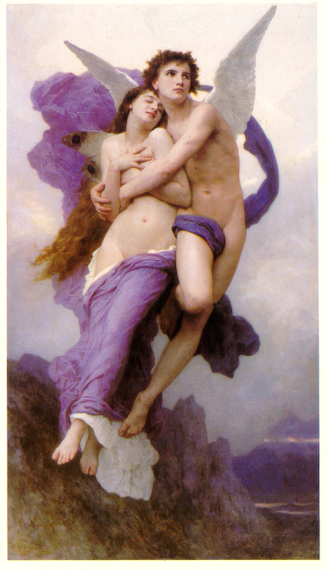
1. It’s been more than five years since I first posted a Greek crossword puzzle, so I’ve made up another one. This one is bigger and better: 16 x 12 instead of 9 x 6, and using the entire Greek alphabet, not just those letters that happen to be identical to English letters. (I recently learned how to do that.) It will be posted tomorrow, June 9th, at 12:00 noon Baltimore time. (I thought I ought to post it at the time when the maximum number of my readers will be awake, and that should cover at least 90% of my readers. Those in East Asia and Oceania are welcome to get up very early or stay up very late to compete.) The prize for the first correct entry is a laudatory mention on this site, $20.00 worth of free books from my sale pages or a 15% discount on however many you would like to buy, plus (in either case) a Cupid and Psyche postcard and a Latin Pan Am pamphlet (see below).

2. I have added a few dozen books to the ‘Books for Sale’ list, including some Classics titles. First come, first serve. If you don’t like the prices, make me an offer. I’m moving in August, and willing to bargain. If no one else makes a better offer and it seems reasonable, I’ll take it. As a bonus to the first six orders, no matter how large or small, I will throw in an official PanAm Latin-language instruction pamphlet from 1962. It is titled ‘Ad Clericos et Religiosos Viros Iuvandos per Terrarum Orbem Peregrinantes’. Click here for a small picture, here for a large one (190 K). Please note that these pamphlets were apparently used as teaching tools at some point, so there is a small amount of underlining or similar marks, in pen, on one page of each, as you can see on the larger picture (near the bottom of the page with the airplane on it).

Posted in Announcements, Crosswords | Leave a comment